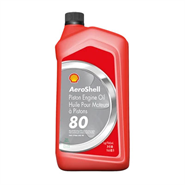
AeroShell Oil W100
Designed for moderate climates, AeroShell Oil W100 provides robust protection and consistent performance across a wide range of operating conditions.

Features and benefits
Suitable for moderate temperature range
Designed to keep particles separated
Specifications & approvals
| Country / OEM | Specification |
|---|---|
| SAE | J1899 Grade 50 |
| Joint Service Designation | OMD-250 |
| Lycoming Engines | Service Instruction No. 1014 N |
| Continental Aerospace Technologies | MHS-24 |
| Pratt & Whitney | Service Bulletin 1183 |
| Curtiss Wright | Various Service Bulletins – refer to relevant Bulletin |
| Franklin Engines | Various Service Bulletins – refer to relevant Bulletin |
The TDS and MSDS are in English, but you can find these documents for other countries in the Shell EPC area
Applications
AeroShell W Oils are available in three different viscosity grades: AeroShell Oil W80 – AeroShell Oil W100 – AeroShell Oil W120.The suffix for each grade corresponds to the viscosity of the oil at 210°F in Saybolt Universal Seconds.
AeroShell W Oils are intended for use in four-stroke (four-cycle) certified reciprocating piston engines, including fuel-injected and turbocharged engines. AeroShell W Oils are not recommended for use in automotive engines. For automotive engines converted for use in aircraft, the specific engine manufacturer or the conversion agency should be consulted for proper oil recommendation.
Most radial engine operators use AeroShell Oil W120 in warm weather operations with AeroShell Oil W100 or AeroShell Oil W 15W-50 being used in cooler ambient temperatures.
AeroShell Oil W100 or AeroShell Oil W 15W-50 are the common choices for most operators of Lycoming and Continental flat engines but, during colder parts of the year, use of AeroShell Oil W80 in place of AeroShell Oil W100 would be an excellent choice.
Although some aircraft engine manufacturers and rebuilders/overhaul agencies suggest in their service bulletins the use of a straight mineral oil in new or newly overhauled engines, other rebuilders or manufacturers, especially for engines such as the Lycoming O-320H and O/LO360E, allow either ashless dispersant or straight mineral oil for break-in, whereas ashless dispersant oils are mandated for break-in for all turbocharged Lycoming engines. Operators should check with engine manufacturers or rebuilders for the correct recommendation for the specific engine and application.
Health, Safety and Environment
-
Health and Safety
- Guidance on Health and Safety is available on the appropriate Safety Data Sheet, which can be obtained from https://www.epc.shell.com.
Protect the Environment
- Take used lubricant to an authorised collection point. Do not discharge into drains, soil or water.
Additional information
Advice
- Advice on applications not covered here may be obtained from your Shell representative.
Get in touch with us
We’re here to assist you with any inquiries or support you may need
Typical Physical Characteristics
| Properties | Method | SAE J1899 Grade 50 | Typical W 100 |
|---|---|---|---|
| SAE Viscosity grade | – | – | 50 |
| Density @15°C kg/m³ | ASTM D4052 | Report | 887 |
| API Gravity | ASTM D287 | Report | 27.8 |
| Kinematic Viscosity @40°C mm²/s | ASTM D445 | Report | 204 |
| Kinematic Viscosity @100°C mm²/s | ASTM D445 | 16.3 to 21.9 | 18.1 |
| Viscosity Index | ASTM D2270 | 95 min | > 96 |
| Pour Point °C | ASTM D5949 | -18 max | < -21 |
| Flash Point °C | ASTM D92 | 243 min | > 250 |
| Total Acid Number mgKOH/g | ASTM D664/974 | 1.0 max | < 0.5 |
| Sulphur %m | ASTM D4951 | 1.0 max | 0.38 |
| Copper corrosion 3 hrs @100°C | ASTM D130 | 1 max | 1a |
| Ash Content %m | ASTM D482 | 0.011 max | < 0.004 |
| Trace Sediment ml/100ml | ASTM D2273 | Must pass | Passes |
| Foaming Tendency | ASTM D892 | Must pass | Passes |
| Trace Metal Content ppm | ASTM D4951 | Must pass | Passes |